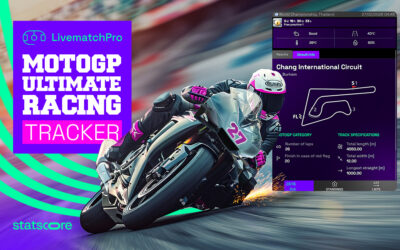
Two wheels, incredible speed, and... LivematchPro. We’ve just expanded our live data widget to include the adrenaline-fueled world of MotoGP, covering every session of the racing calendar! MotoGP has officially hit the grid on LivematchPro. From the lights out in...
Beyond the sideline: how media cover major football events

The countdown to the largest sporting event in history has begun. In 2026, the global football landscape will shift on its axis as 48 nations descend upon North America for 104 matches across three countries. For online sports platforms, media outlets and broadcaster, this will be a true logistical and technological mountain.
With matches spanning four time zones and a field of competitors nearly 50% larger than previous editions, the traditional approach to sports journalism is no longer sufficient. To survive and thrive in 2026, media must move beyond reporting scores and toward orchestrating data experiences.
The Death of the Static Match Report
For decades, the “Match Recap” was the gold standard of sports journalism. A journalist watched the game, wrote 500 words, and published it 20 minutes after the final whistle.
In 2026, that model is obsolete. Social media provides the “what” (the score) and the “how” (the video clip) instantly. Professional media must provide the “why.” This is where deep football data becomes the narrative engine. Leading platforms are now using:
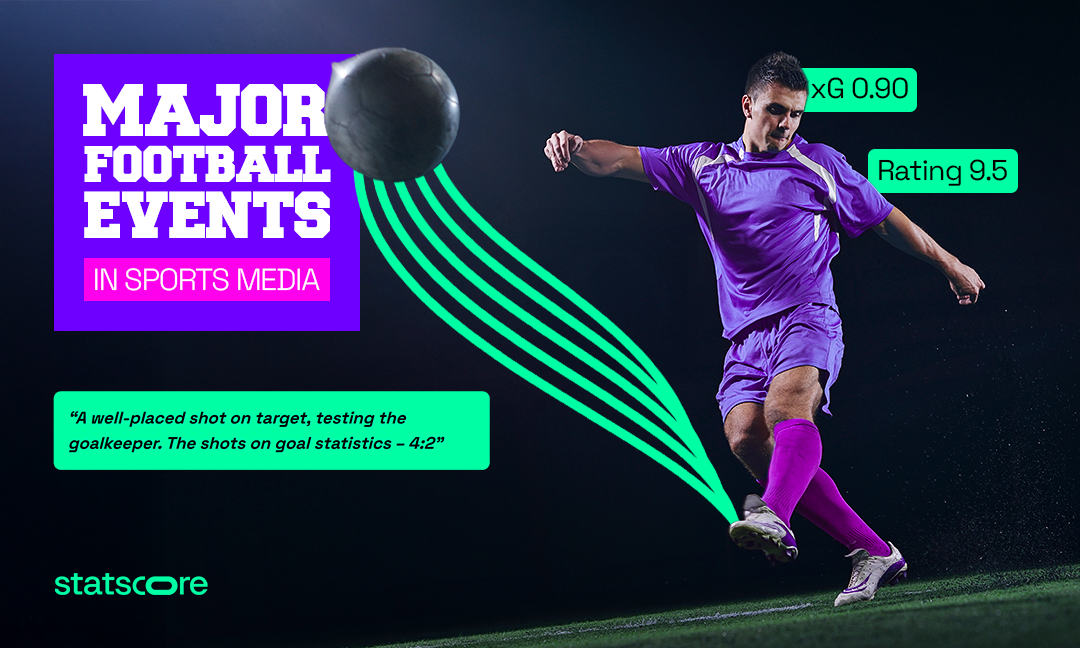
- Expected Goals (xG): To show which team actually deserved to win based on chance quality.
- Zone Dominance & Positional Maps: Visualizing which side is currently carrying out a “dangerous attack” and how the dominance shifts during the game.
- Player Impact Scores: Moving beyond goals and assists to track Player ratings and Performance data – giving credit to the unsung heroes of the pitch.
Solving the “104 Match Problem” with Automation
The sheer volume of the 2026 tournament creates a resource crisis. No editorial team, no matter how large, can manually produce high-quality previews, live trackers, and analytical hubs for 104 matches in 39 days.
The solution is Editorial Automation. By integrating ready-to-use sports data hubs media houses can automate the “heavy lifting”:
- Real-Time Standings: Group tables that update right when a goal is scored in a different city.
- Automated Previews: H2H (Head-to-Head) history, recent form, and squad depth stats.
- Natural Language Generation (NLG): Automated live text commentaries that allow one editor to oversee five matches simultaneously instead of just one.
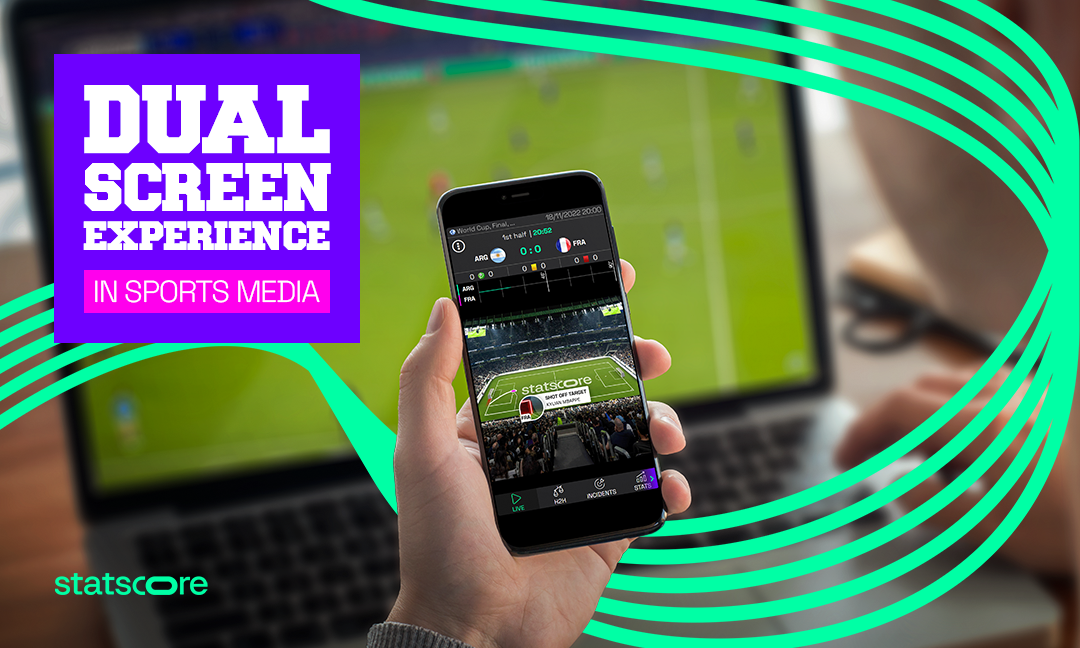
The “Second Screen” is Now the Primary Screen
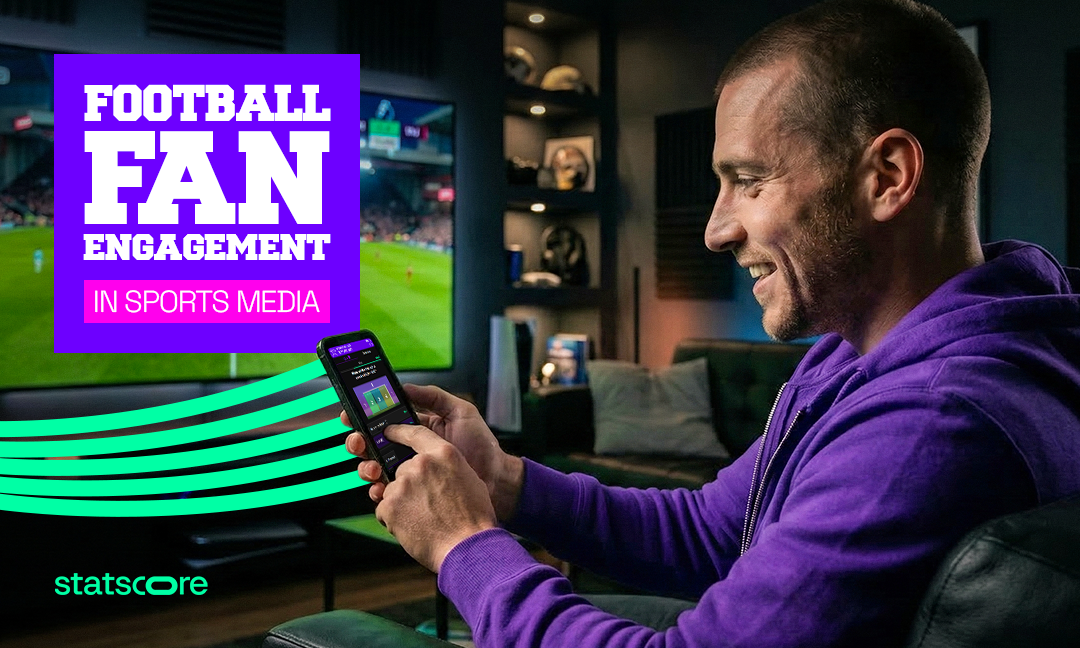
Statistical trends show that over 90% of soccer fans use a mobile device while watching a live match on TV. They aren’t just scrolling social media; they are hunting for context.
The most successful media platforms in 2026 will be those that offer a “Companion Experience.” This means providing Live Visualizations that mirror the broadcast but offer deeper layers. If a fan sees a controversial offside or a brilliant tactical shift, they turn to their “Second Screen” hub to see the data: the pass accuracy, the sprint speeds, and the xG info in real-time.
Gamification: From Passive Readers to Active Users
Attention is the new currency. In a tournament of this scale, “dwell time” (how long a user stays on your site) is the metric that determines advertising revenue.
Media outlets are increasingly integrating interactive layers directly into their data widgets:
- Live Prediction Engines: “Who scores next?” or “Will there be a red card?”
- Fan Rating Systems: Allowing users to rate player performances in real-time, creating a “Community Man of the Match.”
- Bracket Challenges: Interactive tournament trees that update automatically, keeping users coming back from the opening match in Mexico City to the final in New Jersey.
The Monetization of Data
Finally, the shift in coverage is driven by the bottom line. Traditional banner ads are losing impact. High-intent data hubs allow for Contextual Monetization. When a fan checks the “Top Scorers” list, they are in a high-interest state.
This is the perfect moment for integrated, non-intrusive ads or sponsored content from a sportswear brand. By weaving the sponsor into the utility of the data, media outlets increase CTR (Click-Through Rates) without damaging the user experience.
Conclusion: The Data-First Future
As we look toward 2026, the message for the media industry is clear: Scale requires technology. The 48-team tournament is too big to be covered by humans alone, but it is the perfect size for a data-driven ecosystem.
The winners of the 2026 cycle won’t be those with the most journalists, but those with the smartest infrastructure: platforms that turn raw football data into an immersive, automated, and highly profitable fan experience.
SEE CUPCENTER’26 IN ACTION – BOOK A 30-MINUTE DEMO!
Related articles
Fan engagement during football tournaments
In the lead-up to a major football tournament, the competition isn't just on the grass: it’s on the second screen. With the 2026 tournament spanning three countries and sixteen cities, the sheer volume of information can either be a bridge to the fan or a barrier. For...
Dual-screen is the new matchday: How tournament audiences consume football in 2026
Matchday used to be simple. You watched the game. Maybe you read a report later. Today, matchday is a split-screen habit. The live broadcast is still the main stage, but the second screen is where fans actually live: scores, lineups, live stats, group tables,...
Data-driven storytelling in football tournaments: How media win attention before the first whistle
When a major football tournament comes around, the match doesn’t start on opening day. It starts weeks earlier, in search results, in social feeds, and in the quiet ritual fans repeat every morning: checking who plays, who’s fit, who’s trending, who might surprise...