






In the lead-up to a major football tournament, the competition isn’t just on the grass: it’s on the second screen. With the 2026 tournament spanning three countries and sixteen cities, the sheer volume of information can either be a bridge to the fan or a barrier.
For online news platforms and media publishers, “engagement” has evolved. It is no longer about one-way broadcasting; it is about building a centralized digital destination where data, community, and play converge.

The Single Source of Truth: Data Consolidation
The biggest friction point for a fan is fragmented information.
When kickoff times, squad lists, live scores, and travel updates are scattered across different platforms, attention atrophies.
- The Unified Hub: High-level engagement starts with a “command center” approach. By housing real-time match data, comprehensive stats, social feeds, and gamification options, you become the fan’s primary utility.
- First-Party Insights: A centralized platform isn’t just a service for the fan; it’s a goldmine for the media. It allows you to track behavior in real-time: seeing which stories are trending and where the “drop-off” points are, enabling immediate content pivots.

Capturing the Second Screen Through Media Strategy
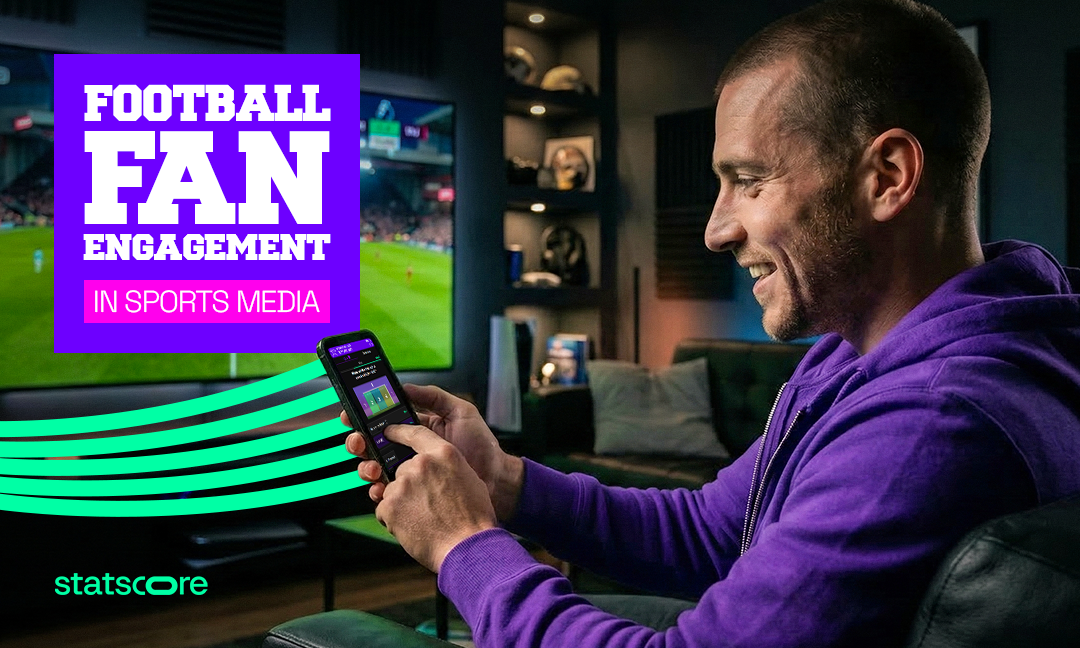
Studies show that over 90% of fans use a second screen while watching the game. The goal of media engagement is to ensure that “second screen” is your screen.
- Contextual Storytelling: Use automated data overlays to explain the “why” behind the “what.” If a star striker’s pass completion drops in the second half, the media narrative can easily highlight the advantages of the opposing defense.
- The “Snackable” Economy: During a 48-team tournament, fans can’t watch every minute. Successful media strategies rely on ultra-fast, high-quality data (match info and insights, stats and reactions) delivered seconds after they happen. This keeps the fan inside your ecosystem even when they aren’t watching the live feed.
In tournament football, those questions arrive in waves. A publisher that can serve them instantly keeps users longer. A publisher that can’t do it becomes a “one-click stop” on the way elsewhere.
Gamification: From Passive to Active
Gamification is the most effective tool for “stickiness.” It transforms the fan from a viewer into a player with a vested interest in every matchday outcome.

- Prediction & Brackets: Beyond the classic tournament bracket, daily “micro-predictions” (e.g., Who wins the next corner?) keep users active during lulls in play.
- Digital Identity & Status: Implementing leaderboards, “fan badges,” and loyalty points for interacting with content creates a sense of competition. When a fan earns a “Super Supporter” badge for a specific team, their emotional tie to your platform deepens.
- AR & Interactive Overlays: Allow fans to “step into” the game with AR filters or interactive 360-degree stadium views. These immersive elements turn a standard match report into an experience worth sharing.
The Strategic Objective: Frictionless Fandom
The underlying theme of 2026 will be eliminating friction.
Whether it’s a fan in Vancouver or a viewer in London, their digital experience should feel localized, personal, and – above all – simple.
When you provide a streamlined environment where they can find the stats they crave, play the games they love, and see the stories that matter, you aren’t just “engaging” them for a month. You are building a habit that lasts far beyond the final trophy lift.
The win is in becoming the essential companion to the game itself!