Two wheels, incredible speed, and... LivematchPro. We’ve just expanded our live data widget to include the adrenaline-fueled world of MotoGP, covering every session of the racing calendar! MotoGP has officially hit the grid on LivematchPro. From the lights out in...
Winning the attention game: audience behavior during global football tournaments

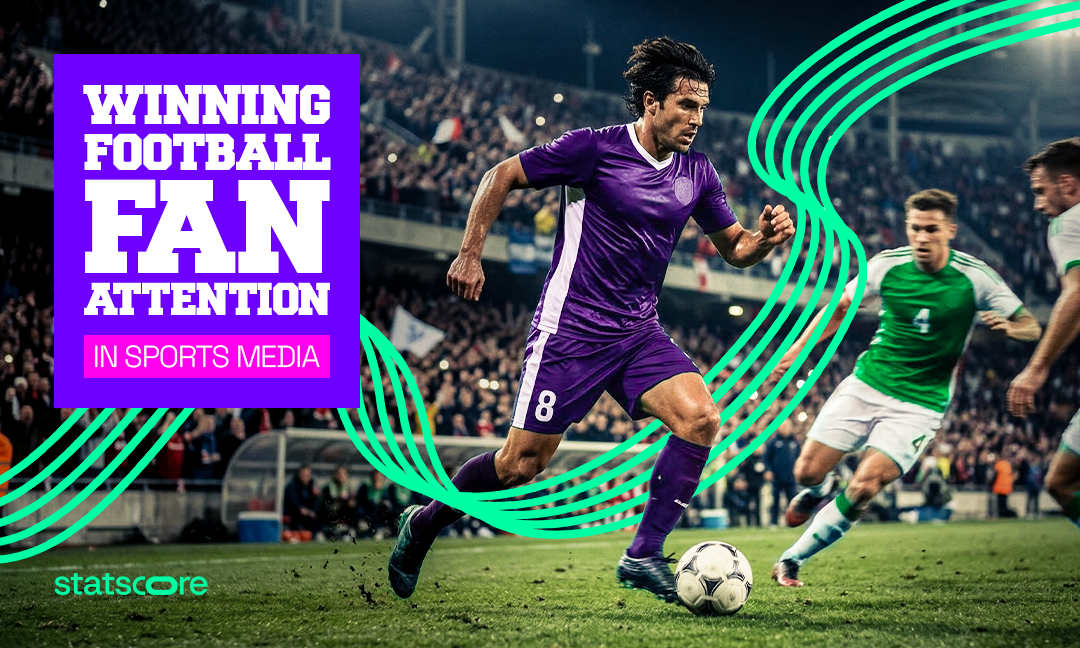
Let’s be honest: the era of “watching” a match is over. In 2026, the game is only half the story. As the biggest tournament in history arrives, expanding to 48 teams and 104 matches, the way fans consume football has shifted from passive viewing to a frantic, data-hungry, multi-tasking experience.
If you are running a sports media site, a news platform, or a fan hub, you aren’t just competing with the TV broadcaster. You are competing with every WhatsApp group, social feed, and fantasy league on a fan’s phone. To win, you don’t just need to show the game – you need to own the conversation around it.
The New Fan Anatomy: Distraction vs. Obsession
The 2026 audience is defined by a paradox: they have the shortest attention span in history, yet the deepest hunger for granular detail. We are no longer dealing with a captivated viewer, but a distracted expert.
-
The Race for “First-to-Know” Status: In the digital age, being first is the ultimate social currency. Fans don’t just want the score; they want to be the one who breaks the news to the group chat or the office. They crave that “insider” status that comes from seeing a tactical shift or a player’s physical fatigue before the commentator even mentions it.
-
Knowledge as Power (and Content): There is a growing desire to build personal “social reach” through expertise. Fans use deep stats: xG, player performance data, or H2H comparisons to craft their own posts and analysis on social media. They aren’t just using the data as a material to power their own digital presence.
-
The “Always-On” Anxiety: With 48 teams and a relentless schedule, there is a genuine fear of missing out (FOMO). This drives a compulsive need to stay “up-to-date” at all times. If a user isn’t watching the game, they are “simulating” it in their mind via your live widgets, looking for any edge that lets them outsmart their peers or their bookmaker.
The Digital Command Center: Data as the Match Day Hub
For the modern fan, the smartphone isn’t a “second screen” – it is the primary interface for the game. While the 4K broadcast runs in the background, the fans’ eyes are glued to their device. Why? Because they are looking for validation.
- Data as the Ultimate Referee: A star midfielder can appear ‘quiet’ or even ‘lazy’ on screen simply because he isn’t part of a highlight-reel goal. A fan’s immediate instinct is to criticize. But behind the scenes, a sophisticated Player Rating system is silently tracking every recovery, every line-breaking pass, and every successful duel. While the crowd might grumble, the data shows he’s actually performing at a 7.5/10 level. He’s doing the “invisible” work: maintaining a 92% pass accuracy under pressure and winning 4 out of 5 ground duels.
- Context Over Scores: Anyone can provide a scoreline in 2026. The real value lies in the “Why.” Why is the team losing? Is it a lack of intensity (low distance covered) or poor finishing (low xG relative to shots)? A fan seeing a 0-1 scoreline feels frustration; a fan seeing that same scoreline alongside a high xG (Expected Goals) but “poor finishing” metrics feels hope,or deeper tactical insight. They can see that the team isn’t failing to create; they are failing to execute.
If your platform doesn’t have these football insights live, your users will leave your ecosystem to find a competitor who does.
Micro-Consumption and the “Five-Second” Rule
With the 2026 tournament spread across three massive countries and 13 different kick-off times, a huge chunk of your global audience will be at work, commuting, or even sleeping during the live action.
The “battle for attention” has shifted to breakfast time and transit hours. Fans don’t have time for a long-form match report; they have five seconds to get the “vibe” of the game.
- The Visualization Advantage: This is where an integrated tournament data centers win. A dynamic “Attack Momentum” tracker or a “Ball Pressure” map tells the story of a 0-0 draw faster than any headline ever could.
- Push-Button Knowledge: Fans want to know the standing of the “Live Table” the moment a goal hits the back of the net. If your data feed has even a small lag, you’ve already lost them to a faster source.
Data as Social Currency: The Rise of Player-Centric Fandom
In 2026, football stats are the ultimate social currency. We are seeing a massive shift where fans follow individual stars as much as national teams. They don’t just consume data; they weaponize it to win arguments in the comments section or to justify their latest bet.
- The Comparison Engine: The modern fan loves a “Player vs. Player” narrative. Being able to instantly pull up stats comparing a veteran striker’s efficiency against a rising star from a different continent is what keeps a user clicking.
- The Emotional Hook: Data goes beyond raw numbers: it provides a narrative. It’s the “Win Probability” shifting from 80% to 10% in the 89th minute. It’s the tension of a penalty shootout visualized through historical success rates and keeper dive patterns.
The Strategic Bottom Line: Centralize or Lose
The biggest threat to your engagement metrics is fragmentation. Every time a fan has to leave your site to check a group standings table or a player’s disciplinary record, there is a massive chance they aren’t coming back.
By embedding an all-in-one football data center, you turn your platform into a “Digital Stadium.” You provide the tools they need to validate their opinions, check their bets, and stay informed – all without ever hitting the “Back” button.
In 2026, the winner won’t be the one with the loudest opinion. It will be the one with the fastest, most reliable, and most engaging data.
SEE CUPCENTER’26 IN ACTION – BOOK A 30-MINUTE DEMO!
Related articles
Beyond the sideline: how media cover major football events
The countdown to the largest sporting event in history has begun. In 2026, the global football landscape will shift on its axis as 48 nations descend upon North America for 104 matches across three countries. For online sports platforms, media outlets and broadcaster,...
Fan engagement during football tournaments
In the lead-up to a major football tournament, the competition isn't just on the grass: it’s on the second screen. With the 2026 tournament spanning three countries and sixteen cities, the sheer volume of information can either be a bridge to the fan or a barrier. For...
Dual-screen is the new matchday: How tournament audiences consume football in 2026
Matchday used to be simple. You watched the game. Maybe you read a report later. Today, matchday is a split-screen habit. The live broadcast is still the main stage, but the second screen is where fans actually live: scores, lineups, live stats, group tables,...