







International football competitions don’t overwhelm newsrooms because the sport is hard to explain. They overwhelm newsrooms because the day never stops.
A normal football weekend has a rhythm. A tournament has an overlap. Matches collide. Storylines multiply. Audiences arrive in waves. Editors publish in bursts. Everyone is “on” for weeks.
So instead of thinking “what do we publish?”, the better question is: how do we operate without quality collapsing?
Here’s a realistic newsroom view of tournament operations, from the first matchday to the final.
The tournament day, as it actually happens
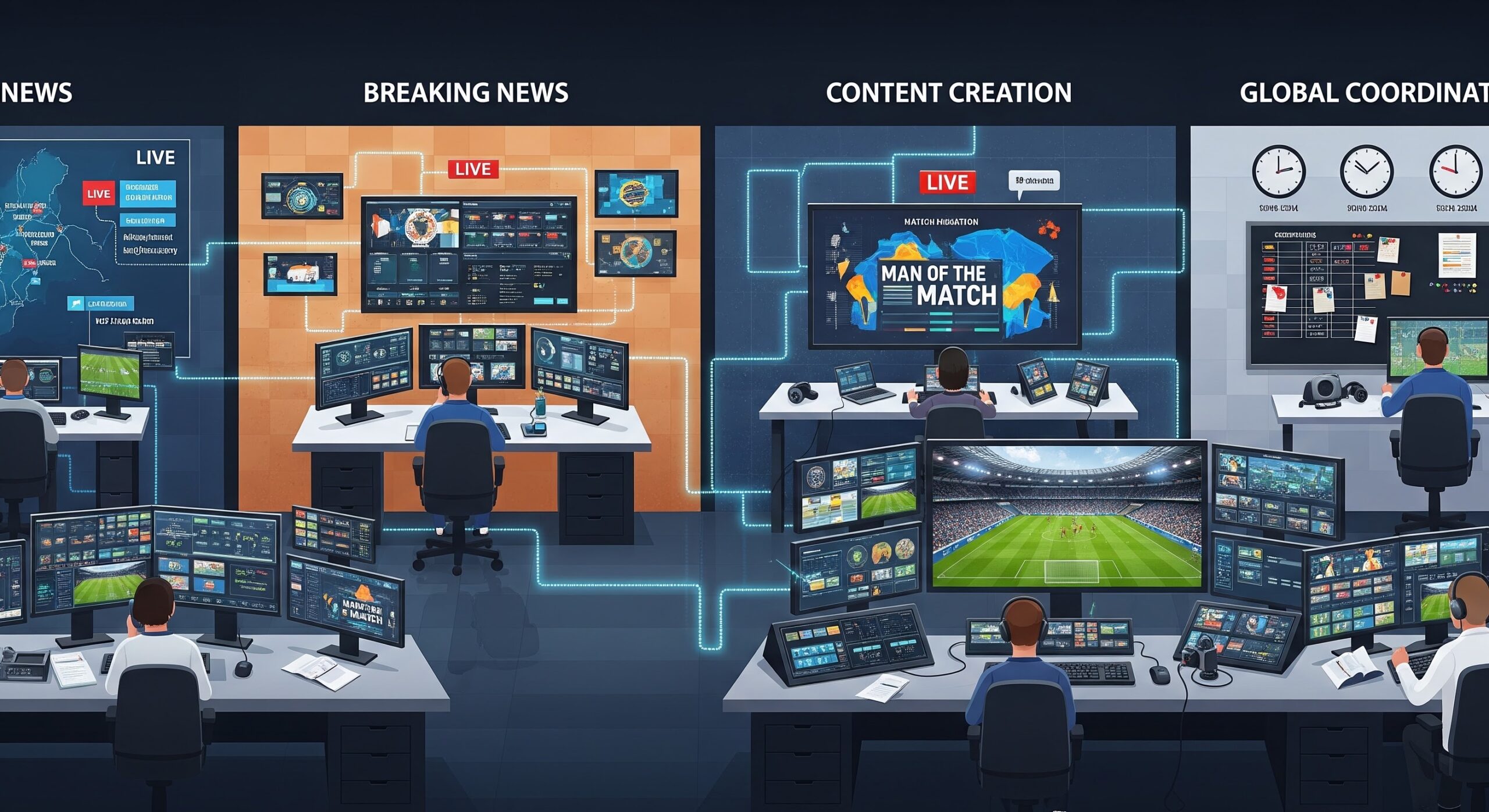
A tournament matchday typically breaks into four operational windows:
Window 1: Morning catch-up
This is when audiences ask: what did I miss and what matters today?
Newsrooms need predictable outputs that don’t require heroics:
- a short “today’s schedule + stakes” brief
- a quick “table reality check”
- a list of key storylines to watch
If you don’t give fans a fast catch-up, they will catch up elsewhere.
Window 2: Pre-match pressure
Line-ups land. Rumours surface. A late change can flip the narrative.
This is where workflow discipline matters:
- a single source of truth for line-ups and match basics
- a standard pre-match update format
- one person accountable for accuracy, not “everyone responsible”

Window 3: Live moments
This is the hardest part: speed plus accuracy under load.
The newsroom challenge is not writing. It’s triage:
- which matches deserve push coverage
- which moments deserve a clip, a card, a post
- what needs context now vs later
Window 4: Post-match consequences
After the whistle, the audience question changes instantly:
- what does this result change?
- what’s next?
- who is suddenly relevant?
If your post-match coverage doesn’t route users into the next match, the table, or the team storyline, you lose the retention loop.
The operational bottleneck nobody wants to admit
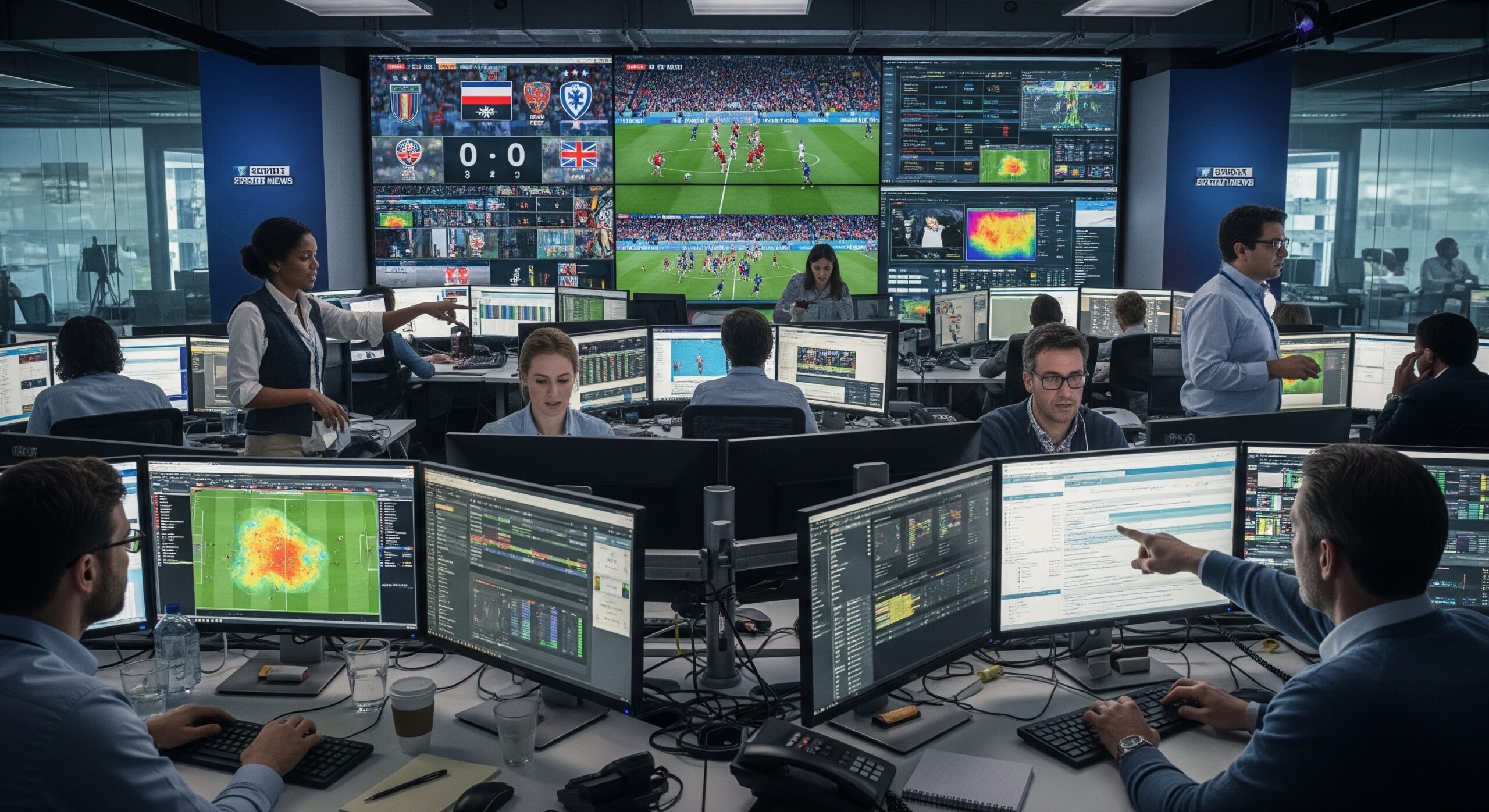
Most tournament pain is caused by two things:
- unclear ownership: who updates what, and when
- unclear minimum standard: what every match page and every update must contain
If you fix those two, coverage quality stabilizes fast.
A lean “tournament ops” model that actually works
You don’t need a bigger newsroom. You need a clearer operating model.
A simple way to assign ownership:
- Accuracy owner: line-ups, key incidents, score, official basics
- Context owner: “what changed”, match narrative, implications
- Distribution owner: social posts, push logic, routing to hub
- Editor on duty: triage and quality control, not writing everything
This reduces duplication and prevents chaos.
Time zones are not a scheduling detail, they are a content strategy
In international competitions hosted across regions, audience waves shift:
- morning summaries
- midday updates
- evening peak live sessions
- overnight recaps
If you map formats to these waves, you stop fighting the day and start riding it.
The quiet win: operations that protect quality for weeks
Tournament coverage is a marathon disguised as a sprint.
If your operating model is built around repeatability, templates, clear ownership, and consequence-driven routing, you can keep quality high for weeks, not just for the opening match.
If you’re planning 2026 tournament coverage, treat it like an operation with clear ownership and repeatable formats, not a daily scramble.
Explore what a structured tournament hub can look like here: CupCenter’26.